Sophie’s World by Jostein Garder
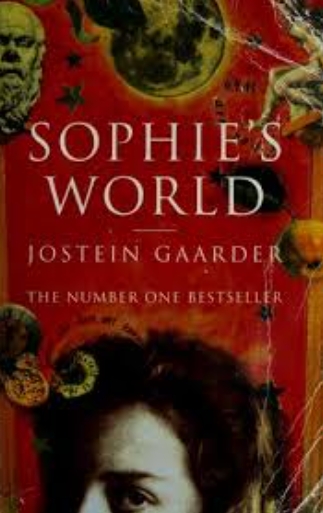
Throughout a way of thinking workshop in my last year of school, we all were allocated various readings for the colder time of year break. The book that I was relegated was Sophie’s world. Perusing it didn’t just familiarize me with the set of experiences and essentials of reasoning, yet in addition kept me interested with a drawing in secret plot. Consequently, it took me on a mysterious and strange excursion bound with the fortunes of philosophical information en route.
Following is a concise outline of the plot and key characters (no spoilers!), with the point being to feature the clever’s remarkable and fascinating nature and ideally urge more perusers to look at this misjudged pearl of a book.
Jostein Gaarder is the diversely inventive creator of the top rated novel, “Sophie’s Reality”. This book was initially distributed in the Norwegian language under the title “Sofie’s Verden” in 1991 by H. Aschehoug and Co. An interpreted rendition in English was subsequently distributed in Extraordinary England by Phoenix House in 1995. This philosophical/secret novel takes one on a chronicled venture worth right around 3000 years, starting from the earliest starting point of Western way of thinking, up to the twentieth century.
Set in Norway, the book spins around a fourteen year old Norwegian school young lady, Sophie Amundsen; the primary hero of the book. She lives with her mom, while her dad lives out of country for the majority of the year. Actually like some other teen, she carries on with a peaceful and ordinary life, devoured by the normal happenings and technicalities of day to day existence. nonetheless, her sharp brain frequently questions the presence and working of the unremarkable items and nature encompassing her. One more significant person in the novel is Alberto Knox. A sort and splendid thinker, he likewise holds a puzzling and clandestine attitude. Obscure to everybody, he is by all accounts nonexistent to the eyes of the living scene. Nonetheless, he strolls into Sophie’s life and places everything in disturbance. Opening her brain to the domain of reasoning and is many inquiries, he alters the whole direction of her life.
At some point, Sophie heads back home from school to track down two mysterious letters, each containing an inquiry for her. One being “Who are you”, and the other “Where did the world come from?” These inquiries leave Sophie in profound marvel, opening her inquisitive brain to see standard nature in another light. These inquiries are only the start. From here on begins her excursion through the historical backdrop of reasoning, as she navigates through the way of life present in the beyond 3000 years, that are either connected with, or have impacted diverse philosophical musings and schools.
Sophie before long finds these letters to be from the erratic savant Alberto Knox. Through the nonstop inflow of these letters, and later face to face, he reveals another way to deal with the ordinary inquiries of life, which, he accepts dwells somewhere down in the folds of one’s conspicuous explanation and comprehension for anything that exists. He drives her brain into understanding the world and its numerous thoughts by scrutinizing their simple presence, just as their actual root and center structure, prior to tolerating them as a piece of this world. This is one of the center topics of the novel, repeating at huge minutes all through the story.
Sophie leaves on her excursion from the earliest starting point of philosophical time, known as the “Pre Socratic” period. A period where philosophical idea was everything except near the very edge of disclosure. Along with Alberto, they explore their direction through the fantasies existing around then and find out with regards to the normal rationalists who fostered their own agreement and speculations about the presence and beginning of the universe. In this way, setting a firm philosophical establishment as far as suspected and approach for a long time to come. Along these lines, with each letter/meeting their excursion wins.
From consequently she enters the universe of Greek Way of thinking. It is there that she is acquainted with Socrates’ thoughts of intelligence and information, while additionally understanding Plato’s division of structure in reality and its changeless thoughts that exist in endlessness, and in conclusion, getting comfortable with Aristotle’s hypothesis of sorting every current component.
Thusly, with each letter/meeting, their excursion wins, as Sophie and Knox channel their direction through various periods of Western history, meanwhile making joins with the period’s individual philosophical environment. Subsequently, they take a brief look at the absolute most noteworthy ages that occurred prior and then afterward the introduction of Christ. They stroll along the Greco-Roman culture, the Medieval times, the Renaissance, Florid, and Sentimentalism among many. Through these periods, Sophie’s ,mind is enhanced with the information on the absolute most noteworthy scholars and societies related with the various developments, and the effect of their points of view and thinking on the particular social orders which step by step set the reason for present day theory.
Alongside these letters and meetings, to practice her reasoning motor further, Knox likewise asks Sophie numerous inquiries about the rationalists that he acquaints her with. Such inquiries, alongside the way of thinking course, get Sophie’s psyche zooming, leaving her with substantial contemplating and a larger number of inquiries unanswered than responded to. It impacts her to see everything from an alternate perspective, or from a whimsical point. It empowers her to embrace a view so evenhanded, a way of thinking never navigated, that on occasion everything, including her own reality turns into an alien to her.
Concurrent with this philosophical excursion, postcards show up occasionally for Sophie, with the character of the sender being obscure by and by. In any case, these postcards are not implied for her, but instead, are addressed to a young lady named Hyde Moller Knag. Henceforth, Sophie is only a reporter. who should advance these letters to Hyde, whom she has never met. The main thing that the two of them share are their birthday celebrations. It is before long found that these postcards are from Hyde’s dad in Lebanon who needs her to have these by her birthday. In spite of the fact that interested, Sophie is likewise careful about them and make an effort not to pay a lot of regard to the entire circumstance. This demonstrates troublesome, when the postcards become alarmingly regular, turning up in the most odd spots. This little secret plot weaves perfectly with the philosophical components of the book. That is on the grounds that the responses to Sophie and Knox’s philosophical real factors, and Hyde’s dad’s thought processes and presence lie toward the finish of the way of thinking course. Thus, in a nail gnawing furor, we hurry through the excess long stretches of Western way of thinking alongside Sophie and Knox, handling difficulties tossed their direction as convoluted contentions, to track down replies, reason, and freedom.
Sophie’s World is one of the most exceptional books one might coincidentally find. Captivating, puzzling and interesting, it opens the peruser’s psyche to the universe of reasoning and its most crucial inquiries, like the contention around one’s presence (another repetitive topic and question). The writer’s evenhanded in this book is to test the peruser into addressing and applying a philosophical way to deal with those ordinary parts of nature and presence that one infrequently considers upon, or accepts about them the thinking took care of to the subliminal since forever ago. Gaarder does this by taking the peruser on a consistent excursion through the basics and facts of Western way of thinking, uncovering muddled thoughts and talks, and afterward separating these into straightforward thinking and center thoughts.
This repetitive course of an oversimplified breakdown of convoluted ideas carries me to perhaps the best nature of this book, i.e, the composition. The shortsighted idea of its exposition and account is the thing that so adequately passes on the messages of the book. That is on the grounds that philosophical realities and thoughts are hard to fathom altogether in one perusing. Gaarder clarifies these ideas through very relate-capable models grounded in our regular reality. Above all, it is through Sophie that we are shown these thoughts, and it is through her brain and eyes that we see and understand these philosophical ideas; a little youngster whose current philosophical information doesn’t outperform that of the majority of the book’s laymen perusers. Along these lines, Gaarder has been capable gather 3000 years worth of history into a novel comprising under 500 pages.
One more intriguing part of the book is the hidden secret of the postcards present, which gradually ascends to the spotlight, becoming one with the philosophical viewpoint. This saves the perusers in consistent quest for the connection between the different sides of the book.
One potential shortcoming of the book might be its sluggish beginning, which suddenly gives way to a lot quicker pace in the last half, as numerous perspectives and subjects go to the bleeding edge. This might muddle a few perusers. Nonetheless, I accept this specific speed was a deliberate choice, to understand criticalness that overwhelms Knox and Sophie’s choices and activities in the last 50% of the story.
I viewed Sophie’s world as incredibly educated, fascinating, and intriguing, having a distinctive impact on me. Every part prodded me to see my environmental elements and presence through a similar objectivity and focal point of unusual thinking as Sophie.
I would prescribe this book to all understanding devotees. While the novel might have been just about as dull and dreary as a set of experiences book, the amicable and relaxed tone of the story voice, alongside a secret plot, keeps the perusers connected with and the stream simple to follow. By moving toward philosophical hypotheses through inquiries regarding our own lives, and mental cycles (How would we know things?, What controls our ethics and morals? and so on), the ideas and understanding determined become more close to home and genuine, rather than being simple course reading information.
 Online study